What to Expect During the Different Stages of Tarmac Driveway Installation
Installing a new tarmac driveway involves several stages, each contributing to the strength, appearance and long-term performance of the finished surface. Although tarmac is a popular choice for residential driveways because of its smooth finish and practical qualities, the quality of the installation depends heavily on careful preparation and correct application.
For homeowners in Watton, Norfolk, understanding the process can make it easier to plan for the work and recognise what a properly completed installation should involve. From the initial site assessment to the final finishing touches, each stage plays an important role in creating a durable driveway.
1. Initial Site Assessment and Planning
The first stage involves assessing the existing driveway area and determining what work is required. The condition of the ground, existing surface, drainage and intended use of the driveway all need to be considered.
A professional assessment helps establish:
- The overall size and layout of the proposed driveway.
- Whether an existing surface needs to be removed.
- The condition and stability of the underlying ground.
- How rainwater will drain away from the surface.
- Whether the driveway needs to accommodate regular vehicle use or heavier loads.
This planning stage is important because problems with the ground or drainage can affect the finished driveway if they are overlooked.
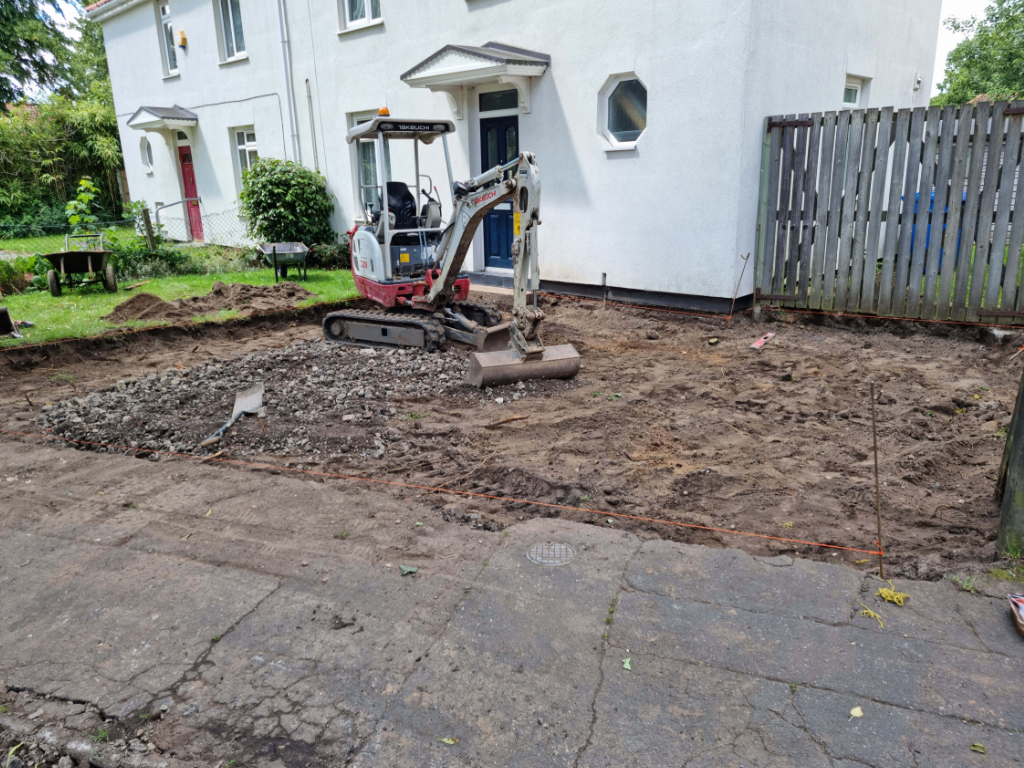
2. Clearing and Excavating the Area
Once the layout has been agreed, the installation area is prepared. If an old driveway is present, the existing material may need to be broken up and removed. Vegetation, loose soil and unsuitable material are also cleared.
Excavation creates sufficient depth for the driveway’s foundation and tarmac layers. The required depth depends on the condition of the ground and the expected use of the surface.
Careful excavation helps prevent the finished driveway from sitting on unstable material, which could otherwise contribute to movement, cracking or uneven areas over time.
3. Preparing and Compacting the Sub-Base
The sub-base is one of the most important parts of a tarmac driveway installation. It provides the structural support beneath the finished surface and helps distribute the weight of vehicles.
A suitable aggregate material is laid across the prepared area and compacted using appropriate machinery. This creates a firm, stable foundation for the subsequent layers.
The sub-base must be properly levelled and compacted. If this stage is rushed or carried out incorrectly, the driveway may develop dips, movement or surface damage as it is used.
4. Installing Edging and Establishing Drainage
Before the tarmac is laid, the driveway’s edges and drainage arrangements need to be considered. Edging provides support to the sides of the surface and helps maintain a defined shape.
Drainage is equally important. The driveway should be formed with suitable gradients so that rainwater runs towards an appropriate drainage point rather than collecting in low areas or flowing towards the property.
This is particularly relevant in Watton, Norfolk, where a well-planned driveway should be designed to cope with changing weather conditions and regular rainfall.
5. Laying the Tarmac Surface
Once the foundation and preparation work are complete, the tarmac can be laid. The material is delivered while hot and spread across the prepared area to achieve the required thickness and levels.
The installation team works carefully to create an even surface, paying attention to edges, transitions and areas around drainage features.
Consistent application is important for both appearance and performance. Poorly distributed material or uneven thickness can affect how the driveway wears under regular vehicle use.
6. Compacting and Finishing the Surface
After the tarmac has been spread, it is compacted using suitable equipment. This process helps create a dense, smooth and stable finish.
The team will check the surface levels, edges and overall appearance, making sure the driveway has the intended shape and falls. Particular attention should be given to areas where the new surface meets paths, entrances or existing hardstanding.
Proper compaction is essential because it helps the tarmac layers bond together and provides the strength needed for everyday use.
7. Final Checks and Allowing the Driveway to Set
The final stage involves checking the completed driveway for visible defects, uneven sections and drainage issues. The surface should have a consistent finish, with no obvious dips or areas where water is likely to collect.
Although tarmac can become usable relatively quickly, it needs time to cool and stabilise. The installer should explain when it is suitable to walk or drive on the new surface and whether any additional precautions are necessary.
Avoiding unnecessary pressure or turning vehicle wheels sharply on a newly laid surface can help protect its finish during the initial period.
Why Professional Installation Makes a Difference
Every stage of tarmac driveway installation contributes to the quality of the finished result. Even an attractive surface can develop problems if the excavation, sub-base preparation, drainage or compaction has not been completed properly.
Professional installation helps ensure that the work is planned around the property’s ground conditions and intended use. It also allows potential issues to be addressed before the tarmac is laid, rather than becoming more difficult to correct later.
For homeowners in Watton, choosing an experienced driveway specialist can help create a practical, neat and long-lasting outdoor surface.
Conclusion
A successful tarmac driveway installation involves much more than simply laying a new surface. Site assessment, excavation, sub-base preparation, drainage, tarmac application and compaction all play an essential role in achieving a durable finish.
Watton Driveway Solutions provides driveway installation services for homeowners in Watton, Norfolk. If you are considering a new tarmac driveway and would like to understand the work involved, contact Watton Driveway Solutions to discuss your requirements.
Call us on: 01953 660 780
Click here to find out more about Watton Driveway Solutions
Click here to complete our contact form and see how we can help with your driveway needs.